





 Why do we ask?


Last resort: Requesting a new Social Security number is uncommon, and the SSA only issues one in exceptional cases, such as ongoing identity theft or serious personal safety concerns. Having a new SSN may create complications or make it harder to prove your identity in the future.
Has your personal data been recently exposed?
Check if information like your Social Security number, email, and passwords is exposed on the dark web.


You have reached the maximum number of scans allowed. Please come back after 24 hours.

Scanning the dark web...
Scanning public databases...
Scanning millions of records...
Narrowing down the search...
We need more information
Please enter a few more details to ensure we show you the right information.
Risk level:
High
You’re at high risk
We found your personal information on the dark web and on data broker sites.
Your personalized protection plan
Product Benefits:
 Up to $3M Reimbursement for identity theft, with up to $1M for Stolen Funds†††
$10K Scam Reimbursement7
Scam Support
Credit, Checking and Savings Activity Alerts: Unlimited Accounts
Credit & Payday Loan Lock2
Credit Monitoring:
3 Bureau1
Automatic Data Broker Removal8
Dark Web Monitoring
Priority 24/7 Customer Phone Support
Up to $3M Reimbursement for identity theft, with up to $1M for Stolen Funds†††
$10K Scam Reimbursement7
Scam Support
Credit, Checking and Savings Activity Alerts: Unlimited Accounts
Credit & Payday Loan Lock2
Credit Monitoring:
3 Bureau1
Automatic Data Broker Removal8
Dark Web Monitoring
Priority 24/7 Customer Phone Support
LifeLock Total
Your price:
$
349.99
Your price:
$
34.99
60-day money back guarantee with an annual plan
24/7 Live Member Support
No one can prevent all cybercrime or prevent all identity theft.
- Price valid for introductory term. After that, your price will renew at the standard price.
- Your subscription begins immediately after your transaction is complete. A payment method is required at sign-up for trials, and you will be charged at the end of your trial, unless canceled first.
- Prices are subject to change and may be charged up to 35 days prior to renewal. Cancel here or contact Member Services.
- Restrictions apply. Automatically renewing subscription required. If you're a victim of identity theft and not satisfied with our resolution, you may receive a refund for the current term of your subscription. See lifelock.norton.com/guarantee for complete details.
††† Up to $1 million coverage for Lawyers and Experts included with all plans. Reimbursement and expense compensation vary according to plan. Insurance benefits are issued by third parties. See lifelock.norton.com/legal for policy info.
1 Bureau Monitoring and Monthly Credit Report and Score / 3 Bureau Monitoring and Monthly Credit Report and Score.
2 Credit Lock cannot prevent all account takeovers, unauthorized account openings, or credit file inquiries. Deactivates if you downgrade or cancel your subscription.
7 Scam protection coverage as part of identity theft benefits is currently available to all customers residing in the United States, including U.S. territories and the District of Columbia, with the exception of residents of New York. Gen Digital is not a licensed insurance producer. Benefits under the Master Policy are issued and covered by HSB Specialty Insurance Company. You can find further details and exclusions in the summary of benefits.
8 After setup, automatic data broker removal service scans and requests removal every 90 days.
Risk level:
Medium
You’re at medium risk
We found your personal information on data broker sites.
Your personalized protection plan
Product Benefits:
Up to $1.2M Reimbursement for identity theft, with up to $100K for Stolen Funds†††
$5K Scam Reimbursement7
Scam Support
Credit, Checking and Savings Activity Alerts:
5 Accounts
Credit & Payday Loan Lock2
Credit Monitoring:
3 Bureau1
Automatic Data Broker Removal8
Dark Web Monitoring
Priority 24/7 Customer Phone Support
LifeLock Advanced
Your price:
$
199.99
Your price:
$
19.99
60-day money back guarantee with an annual plan
24/7 Live Member Support
No one can prevent all cybercrime or prevent all identity theft.
- Price valid for introductory term. After that, your price will renew at the standard price.
- Your subscription begins immediately after your transaction is complete. A payment method is required at sign-up for trials, and you will be charged at the end of your trial, unless canceled first.
- Prices are subject to change and may be charged up to 35 days prior to renewal. Cancel here or contact Member Services.
- Restrictions apply. Automatically renewing subscription required. If you're a victim of identity theft and not satisfied with our resolution, you may receive a refund for the current term of your subscription. See lifelock.norton.com/guarantee for complete details.
††† Up to $1 million coverage for Lawyers and Experts included with all plans. Reimbursement and expense compensation vary according to plan. Insurance benefits are issued by third parties. See lifelock.norton.com/legal for policy info.
1 Bureau Monitoring and Monthly Credit Report and Score / 3 Bureau Monitoring and Monthly Credit Report and Score.
2 Credit Lock cannot prevent all account takeovers, unauthorized account openings, or credit file inquiries. Deactivates if you downgrade or cancel your subscription.
7 Scam protection coverage as part of identity theft benefits is currently available to all customers residing in the United States, including U.S. territories and the District of Columbia, with the exception of residents of New York. Gen Digital is not a licensed insurance producer. Benefits under the Master Policy are issued and covered by HSB Specialty Insurance Company. You can find further details and exclusions in the summary of benefits.
8 After setup, automatic data broker removal service scans and requests removal every 90 days.
Risk level:
Low
Good news!
We didn’t find your personal information across millions of records or on public data sources.
Your personalized protection plan
Product Benefits:
Up to $1.05M Reimbursement for identity theft, with up to $25K for Stolen Funds†††
Identity Restoration Specialists
Credit, Checking and Savings Activity Alerts:
2 Accounts
Credit & Payday Loan Lock2
Credit Monitoring:
2 Bureau1
Automatic Data Broker Removal8
Dark Web Monitoring
Breach Alerts
24/7 Customer Phone Support
Lifelock Core
Your price:
$
124.99
Your price:
$
12.49
60-day money back guarantee with an annual plan
24/7 Live Member Support
No one can prevent all cybercrime or prevent all identity theft.
- Price valid for introductory term. After that, your price will renew at the standard price.
- Your subscription begins immediately after your transaction is complete. A payment method is required at sign-up for trials, and you will be charged at the end of your trial, unless canceled first.
- Prices are subject to change and may be charged up to 35 days prior to renewal. Cancel here or contact Member Services.
- Restrictions apply. Automatically renewing subscription required. If you're a victim of identity theft and not satisfied with our resolution, you may receive a refund for the current term of your subscription. See lifelock.norton.com/guarantee for complete details.
††† Up to $1 million coverage for Lawyers and Experts included with all plans. Reimbursement and expense compensation vary according to plan. Insurance benefits are issued by third parties. See lifelock.norton.com/legal for policy info.
1 Credit features require successful setup, identity verification, and sufficient credit history by the appropriate credit bureau. Credit monitoring features may take several days to activate after enrollment.
2 Identity Lock cannot prevent all account takeovers, unauthorized account openings, or credit file inquiries. Deactivates if you downgrade or cancel your subscription.
8 After setup, automatic data broker removal service scans and requests removal every 90 days.
1/2
Finding your match...

DID YOU KNOW?
10 cents
If your information is exposed or stolen in a data breach, it can end up on the dark web where it can be sold for as little as 10 cents.
100M+
LifeLock monitors hundreds of millions of data points a second.
Based on your concerns, the best plan for you is:
LifeLock Core
(Individual)
LifeLock Advanced
(Individual)
LifeLock Total
(Individual)
LifeLock Core
(2 adults)
LifeLock Advanced
(2 adults)
LifeLock Total
(2 adults)
LifeLock Core
(2 adults + up to 10 kids)
LifeLock Advanced
(2 adults + up to 10 kids)
LifeLock Total
(2 adults + up to 10 kids)
Pricing details below*
Pricing details below*
Pricing details below*
Pricing details below*
Pricing details below*
Pricing details below*
Pricing details below*
Pricing details below*
Pricing details below*
- Up to $1.05M Reimbursement for identity theft, with up to $25K for Stolen Funds†††
- Up to $1.2M Reimbursement for identity theft, with up to $100K for Stolen Funds†††
- Up to $3M Reimbursement for identity theft, with up to $1M for Stolen Funds†††
- Up to $1.05M Reimbursement for identity theft, with up to $25K for Stolen Funds††† for each adult
- Up to $1.2M Reimbursement for identity theft, with up to $100K for Stolen Funds††† for each adult
- Up to $3M Reimbursement for identity theft, with up to $1M for Stolen Funds††† for each adult
- Up to $1.05M Reimbursement for identity theft, with up to $25K for Stolen Funds††† for each adult
- Up to $1.2M Reimbursement for identity theft, with up to $100K for Stolen Funds††† for each adult
- Up to $3M Reimbursement for identity theft, with up to $1M for Stolen Funds††† for each adult
- Credit Monitoring Coverage1
- Credit Monitoring1 each adult
- Credit Monitoring1 for family
- Credit, Checking & Savings Account Activity Alerts
- Credit, Checking and Savings Activity Alerts for each adult
- Credit, Checking and Savings Activity Alerts for family
- 401K & Investment Account Activity Alerts
- 401K/Investment Account Alerts for each adult
- 401K/Investment Account Alerts for family
- Recurring and Unusual Charge Alerts
- Unexpected & Suspicious Charge Alerts for each adult
- Unexpected & Suspicious Charge Alerts for family
- Stolen Funds Reimbursement†††
- Stolen Funds Reimbursement††† for each adult
- Stolen Funds Reimbursement††† for family
- Lawyers and Experts†††
- Lawyers & Experts††† for each adult
- Lawyers & Experts††† for family
- Automatic Data Broker Removal8
- Automatic Data Broker Removal8 for each adult
- Automatic Data Broker Removal8 for family
- Scam Reimbursement7
- Scam Reimbursement7 for each adult
- Scam Reimbursement7 for family
- Credit Reports & Scores1
- Credit Report & Score for each adult
- Credit Report & Score for family
- Social Media Monitoring
- Social Media Monitoring for each adult
- Social Media Monitoring for family

We have more plans to choose from.
See all plans

Have questions?
Contact sales
*Your subscription begins immediately after payment and automatically renews unless cancelled. Discount for annual plans are compared to monthly billing. Prices subject to change and may be charged up to 35 days before current term ends. Cancel here or contact Member Services.
††† Up to $1 million coverage for Lawyers and Experts included with all plans. Reimbursement and expense compensation vary according to plan. Insurance benefits are issued by third parties. See LifeLock.Norton.com/legal for policy info.
1 Credit features require successful setup, identity verification and sufficient credit history by the appropriate credit bureau. Credit monitoring features may take several days to activate after enrollment.
7 Scam protection coverage as part of identity theft benefits is currently available to all customers residing in the United States, including U.S. territories and the District of Columbia, with the exception of residents of New York. Gen Digital is not a licensed insurance producer. Benefits under the Master Policy are issued and covered by HSB Specialty Insurance Company. You can find further details and exclusions in the Summary of Benefits.
8 After setup, automatic data broker removal service scans and requests removal every 90 days.
Why do we ask?
Identifying your concerns gives us the ability to recommend the right plan for your needs.
Return to quiz
Why do we ask?
Knowing this number helps us recommend coverage that fits your needs.
Return to quiz
Why do we ask?
Providing your email address makes you eligible for notifications of potential identity threats.
Return to quiz
How to check if someone is using your Social Security number
Your Social Security number is tied to your identity, and if it falls into the wrong hands, it can lead to serious financial consequences. Find out how to check if someone is using your SSN. Then use LifeLock to help monitor your personal info for signs of misuse and get alerts if anything looks off.
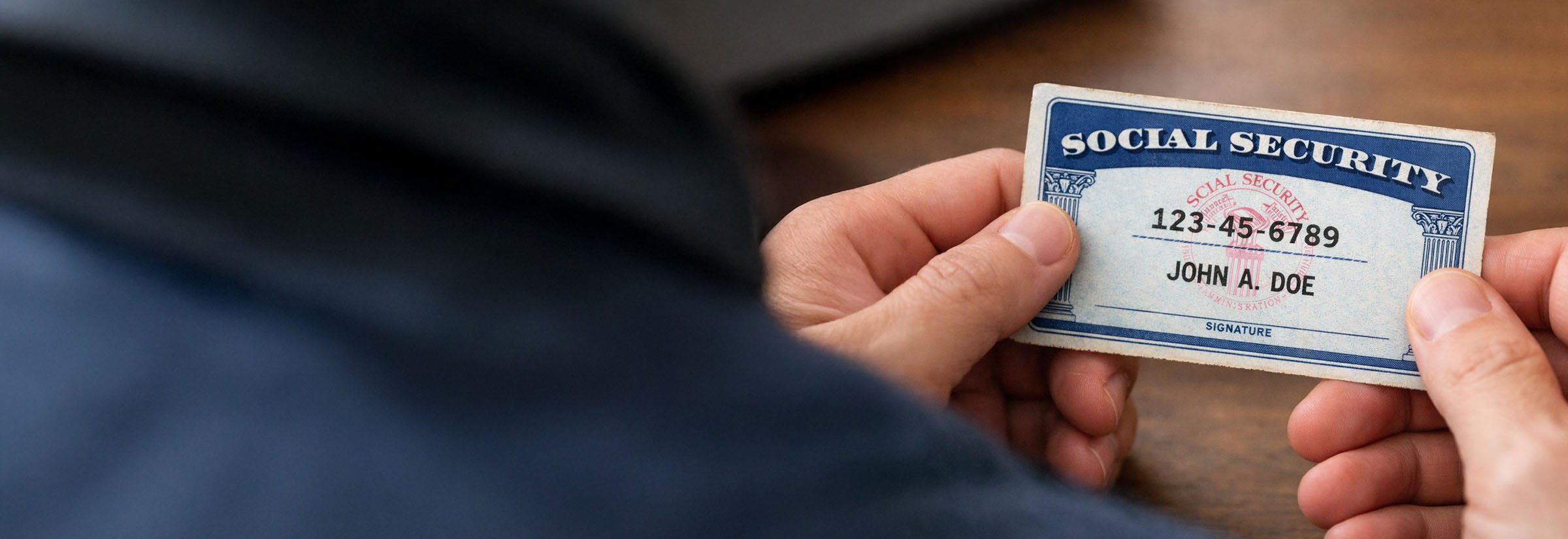

Your Social Security number (SSN) is a critical piece of your identity. If someone else gets hold of it, they could use it to open accounts, apply for loans, and create financial headaches for you.
SSNs can be compromised through enormous incidents, like the National Public Data (NPD) breach that exposed 2.9 billion rows of data including Social Security numbers. But there’s a measurable shift towards smaller-scale data breaches, with data from Gen showing a 76% increase in data breach events but an 81% drop in the number of leaked records in Q3 2025 compared to the previous quarter.
But, however it gets exposed, the sooner you spot suspicious activity related to your SSN, the sooner you can take steps to protect your identity and minimize the damage. Here’s how to check if someone is using yours.
1. Verify your earnings in your Social Security statement
Identity thieves may use a stolen SSN to get a job or claim government benefits in someone else’s name. If you’re a victim, both situations can appear in your Social Security statement in discrepancies like earnings that don’t match your actual income or wages reported in a state you don’t live in.
You can check your Social Security statement online. Here’s how:
- Go to ssa.gov/myaccount and click Sign In, or select Create an Account if you don’t already have one. Note that you need an active Login.gov or ID.me account to access your information.
- Review your statement carefully, paying close attention to your earnings record, benefits, and taxes paid.
- If you see employers you don’t recognize, unexpected benefits, or incorrect earnings, contact the Social Security Administration at 1-800-772-1213.
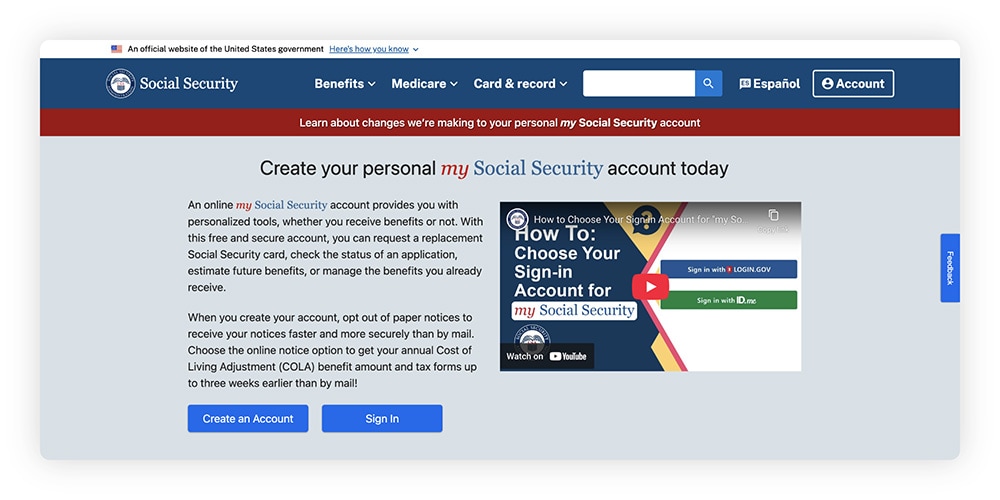
The ssa.gov/myaccount website interface with options for creating an account and signing in.
Just bear in mind that there can be a lag between Social Security fraud and signs of misuse appearing on your Social Security statement. If an employer pays someone using your SSN, the wages might not be reported until the end of the tax year, for example.
2. Review your credit report for unfamiliar accounts
Your Social Security number is required to open new credit accounts or apply for loans, so reviewing your credit report is a smart way to see if someone else is using it. Look over your credit report for accounts you don’t recognize, like credit cards or loans you never opened, and take note of any hard inquiries you didn’t authorize.
If you’re unexpectedly being rejected for loans or credit, this could be a sign that someone is using your information, since fraudulent activity can cause your credit score to drop.
Checking your own credit report doesn’t lower your credit score, so you can review it as often as needed. Here’s how to check your credit report:
- Go to AnnualCreditReport.com.
- Request a free report from Experian®, Equifax®, and TransUnion®.
- Review each report carefully for unfamiliar accounts or inquiries.
- Keep a record of anything suspicious and follow up with the bureau if needed.
3. Monitor your bank statements for strange activity
Regularly review your bank statements and financial accounts for any unusual transactions, including unexpected purchases, withdrawals, transfers, or fees. When fraudsters get hold of your SSN, they often combine it with other sensitive data to gain unauthorized access to your accounts.
If you notice anything unusual, contact your financial institutions immediately to dispute the charges and take the next steps to secure your accounts.
4. Check your mail for unexpected bills or government notices
Junk mail isn’t just annoying — sometimes it’s the first sign of Social Security fraud. Fraudsters may open credit accounts, file taxes, or even get a job using your SSN, and the paper trail often shows up in your mailbox. Here are a few red flags to watch for:
- W-2 forms for income you didn't earn: This suggests an identity thief may have successfully used your SSN in a job application to carry out employment-related fraud.
- Bills from unfamiliar companies: These could indicate accounts opened in your name without your knowledge.
- Debt collection notices: These are especially concerning if you don't recognize the debt or the creditor.
If you receive any suspicious mail, don't ignore it and contact the sender for more information.
5. Scan the dark web for your SSN
The dark web houses many marketplaces where cybercriminals sometimes buy and sell stolen personal data, including passwords, credit card numbers, and SSNs. Conducting a dark web scan can help you determine if your SSN has been compromised and is being passed around by criminals.
While you can't remove your SSN from the dark web once it’s there, nor can you change it as easily as a password, knowing whether somebody exposed your information allows you to take action. If your SSN is found on the dark web, you’ll want to lock your SSN, freeze your credit, and sign up for ongoing dark web monitoring.
6. Sign up for an identity theft protection service
A trusted identity theft protection service can help keep an eye on your Social Security number and alert you to suspicious activity. LifeLock notifies you if someone uses your SSN, name, address, or date of birth in applications for credit services. It also monitors for other signs of identity theft, such as USPS address changes, so you can act quickly to help protect your identity from further misuse.
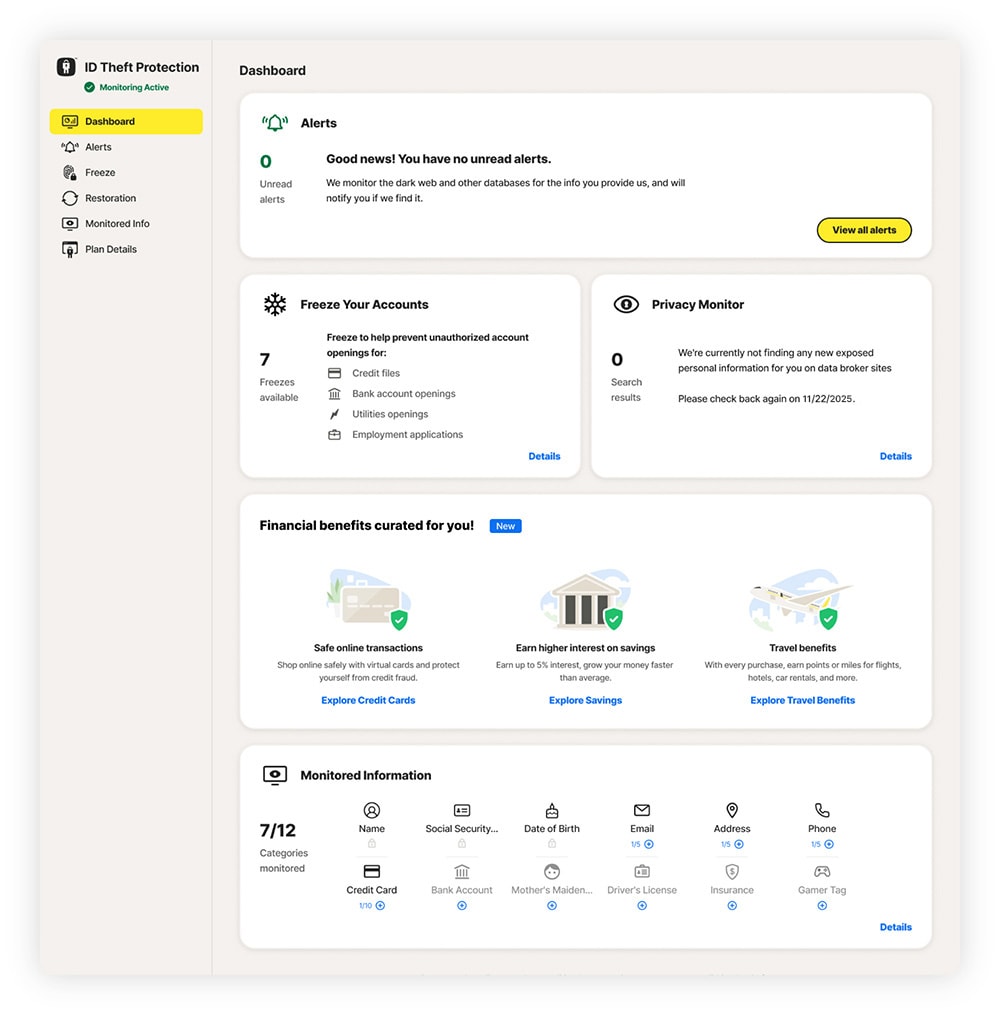
LifeLock’s dashboard showing alerts and monitored information.
What to do if someone steals your Social Security number
If you know or suspect that someone has your Social Security number, it’s crucial to act quickly to protect yourself from further misuse. Steps like placing a credit freeze, locking your SSN, and reporting the incident to the proper authorities can help limit the fallout. These steps also create an important paper trail that could come in handy if more fraudulent activity occurs.
1. Lock your SSN with the SSA
Protecting your Social Security number with an SSA lock helps keep others from accessing and changing your Social Security records online. You can lock your SSN for free through the government’s E-Verify Self Lock tool:
- Go to e-verify.gov.
- Select Self Lock.
- Choose and answer three security questions that you’ll need later if you want to unlock your SSN.
You can also call the Social Security Administration at 1-800-772-1213 for help.
2. Request a credit freeze with the credit bureaus
Placing a credit freeze with the three credit bureaus — Experian, Equifax, and TransUnion — means that lenders can’t access your credit file to approve new loans or accounts. This can help prevent identity thieves from opening new credit accounts in your name using stolen sensitive information.
However, bear in mind that a credit freeze will also apply to you, and you’ll have to temporarily unfreeze your credit if you want to open a new account.
Credit freezes are always free, and you’ll need to contact each bureau individually to set one up. Here’s how to contact each bureau to freeze your credit and help protect against Social Security number misuse:
Equifax |
Experian |
TransUnion |
|---|---|---|
1-888-378-4329 |
1-888-397-3742 |
1-800-916-8800 |
Equifax Information Services LLC |
Experian Security Freeze |
TransUnion Consumer Solutions |
Another option is to place a fraud alert, which encourages creditors or lenders to take additional steps to verify that it’s you applying for a new loan or credit card. You only need to place an alert with one of the three credit bureaus, and that bureau will contact the other two.
3. Report the identity theft to the FTC and IC3
When you report identity theft or that your SSN has been stolen your SSN has been stolen to the FTC and IC3, you may help insulate yourself from fraudulent activities undertaken in your name. You don’t want to be liable for fraudulent debt, and spreading the word about your identity theft can help mitigate damage.
How to report Social Security fraud to the FTC:
- Go to the FTC’s identity theft portal.
- Click Get Started and select the option that best reflects your situation.
- Follow the FTC’s personalized recovery plan. If you were the victim of ID theft, they also provide prewritten letters to send to the right parties to dispute damages.
If you’d rather speak to someone on the phone, call 1-877-FTC-HELP (1-877-382-4357).
How to report Social Security fraud to the IC3:
- Go to the IC3’s complaints page and click File a Complaint.
- The IC3 asks that you have the following information ready before you proceed: your address, email address, phone number, description of the incident, and any additional information requested in the form deemed relevant to your report.
- It will guide you through the remaining steps with on-screen instructions.
4. Notify your local police
Reporting Social Security fraud to the police can strengthen your case in certain instances. While the police don’t specialize in identity theft, they have access to information that can increase your chances of finding the culprit who committed fraud.
Here’s what you should do when reporting Social Security fraud to the police:
- Gather materials, like your FTC report, valid ID, and proof of address.
- File a police report. How to do this will depend on your local police department.
- Keep a copy of your police report.
5. Contact the IRS
Contact the IRS and tell them your SSN has been stolen. In one of the most nefarious tax scams, criminals can use your SSN to file and claim your tax return. If your SSN has been used fraudulently for taxes, you may need to file IRS Form 14039 to report identity theft and protect your tax record.
You can also get an Identity Protection PIN (IP PIN) from the IRS, which you’ll be required to submit along with your next tax return. This can help prevent a fraudster with access to your SSN from committing tax fraud by filing a return in your name before you get a chance.
6. Send a letter to debt collectors
You have the right to block contact with debt collectors regarding debts that you don’t owe. The FTC provides a sample letter on page 25 of the recovery guidance document. You’ll need to provide some evidence, like your FTC identity theft report.
7. Regularly monitor your accounts
When someone has your SSN, they could open credit accounts in your name, leading to unexpected debt and negatively affecting your credit score. Keeping a close eye on your credit report helps you catch any unusual activity early.
If staying on top of it feels overwhelming, a credit monitoring service can track your reports and alert you to important changes, giving you peace of mind and more control over your identity.
How long does SSN fraud recovery take?
How long it’ll take to fully resolve fraud that follows your SSN being stolen depends on what harm the fraudster managed to cause. Credit report disputes must be investigated and resolved by the credit bureaus within 45 days, for instance, while tax-related fraud can take over a year to resolve, depending on how complicated the case is.
After you’ve taken action to restore your identity and protect against further SSN misuse, signs that your recovery is heading in the right direction include all of your credit disputes being resolved, no new errors appearing on your reports, and your SSA statement only showing accurate information. However, the specifics vary in each unique identity theft case.
Monitor your SSN for fraudulent use
No matter how careful you are, you can still fall victim to identity theft. Your Social Security number could be compromised in a cyberattack or data breach that you have no control over, leaving you exposed to the risk of fraud that affects your credit score, finances, and more.
LifeLock can help you monitor for signs that your Social Security number is being used fraudulently, making it easier to detect identity theft before it spirals out of control. Plus, if your wallet is stolen, we can help you cancel or replace your Social Security card, credit cards, and more.
FAQs
Should I be worried if someone has my Social Security number?
Yes, if someone has your Social Security number and other personal details, they could use it to open credit accounts or apply for jobs in your name. This can lead to lasting effects of identity theft, affecting your credit, employment history, and making it harder to get loans, buy a home, or take advantage of other financial opportunities in the future.
Can I put an alert on my Social Security number?
Yes, you can set up credit alerts via the three credit bureaus. LifeLock also includes Social Security number alerts that notify you of suspicious activity linked to your SSN.
How can Social Security identity theft occur?
Social Security identity theft happens when someone gets hold of your SSN, through social engineering scams, data breaches, or stolen mail, and uses it to commit fraud in your name. This can include opening credit accounts, filing false tax returns, or applying for government benefits.
Can someone steal my identity with the last four digits of my SSN?
Yes, organizations use the last four digits of your SSN to verify your identity. If someone has these digits along with other personally identifiable information used in the verification process, they could potentially use it to commit identity theft.
Editors’ note: Our articles provide educational information about identity theft, scams, financial fraud, and other topics that can put your identity or personal accounts at risk. LifeLock offerings may not cover or protect against every type of crime, fraud, scam, or threat we write about. For more details about how we write, review, and update our articles, see our Editorial Policy.
This article contains
- 1. Verify your earnings in your Social Security statement
- 2. Review your credit report for unfamiliar accounts
- 3. Monitor your bank statements for strange activity
- 4. Check your mail for unexpected bills or government notices
- 5. Scan the dark web for your SSN
- 6. Sign up for an identity theft protection service
- What to do if someone steals your Social Security number
- How long does SSN fraud recovery take?
- Monitor your SSN for fraudulent use
- FAQs
Related articles

Identity Theft
How to lock your Social Security number and other tips to protect it
April 15, 2025
·
13 min read
Internet Security
What to do if your Social Security number is on the dark web
May 05, 2026
·
9 min read



Identity Theft
How to lock your Social Security number and other tips to protect it
April 15, 2025
·
13 min read
Internet Security
What to do if your Social Security number is on the dark web
May 05, 2026
·
9 min read
Identity Theft
How to lock your Social Security number and other tips to protect it
April 15, 2025
·
13 min read
Internet Security
What to do if your Social Security number is on the dark web
May 05, 2026
·
9 min read