

 Why do we ask?


Tip: When looking for ways to improve your credit mix, consider the overall impact on your credit and your financial situation. For instance, opening new accounts can result in excessive hard inquiries and higher balances, which can temporarily hurt your credit score. And, remember to never take on new credit that you can’t afford.
Has your personal data been recently exposed?
Check if information like your Social Security number, email, and passwords is exposed on the dark web.


You have reached the maximum number of scans allowed. Please come back after 24 hours.

Scanning the dark web...
Scanning public databases...
Scanning millions of records...
Narrowing down the search...
We need more information
Please enter a few more details to ensure we show you the right information.
Risk level:
High
You’re at high risk
We found your personal information on the dark web and on data broker sites.
Your personalized protection plan
Product Benefits:
 Up to $3M Reimbursement for identity theft, with up to $1M for Stolen Funds†††
$10K Scam Reimbursement7
Scam Support
Credit, Checking and Savings Activity Alerts: Unlimited Accounts
Credit & Payday Loan Lock2
Credit Monitoring:
3 Bureau1
Automatic Data Broker Removal8
Dark Web Monitoring
Priority 24/7 Customer Phone Support
Up to $3M Reimbursement for identity theft, with up to $1M for Stolen Funds†††
$10K Scam Reimbursement7
Scam Support
Credit, Checking and Savings Activity Alerts: Unlimited Accounts
Credit & Payday Loan Lock2
Credit Monitoring:
3 Bureau1
Automatic Data Broker Removal8
Dark Web Monitoring
Priority 24/7 Customer Phone Support
LifeLock Total
Your price:
$
349.99
Your price:
$
34.99
60-day money back guarantee with an annual plan
24/7 Live Member Support
No one can prevent all cybercrime or prevent all identity theft.
- Price valid for introductory term. After that, your price will renew at the standard price.
- Your subscription begins immediately after your transaction is complete. A payment method is required at sign-up for trials, and you will be charged at the end of your trial, unless canceled first.
- Prices are subject to change and may be charged up to 35 days prior to renewal. Cancel here or contact Member Services.
- Restrictions apply. Automatically renewing subscription required. If you're a victim of identity theft and not satisfied with our resolution, you may receive a refund for the current term of your subscription. See lifelock.norton.com/guarantee for complete details.
††† Up to $1 million coverage for Lawyers and Experts included with all plans. Reimbursement and expense compensation vary according to plan. Insurance benefits are issued by third parties. See lifelock.norton.com/legal for policy info.
1 Bureau Monitoring and Monthly Credit Report and Score / 3 Bureau Monitoring and Monthly Credit Report and Score.
2 Credit Lock cannot prevent all account takeovers, unauthorized account openings, or credit file inquiries. Deactivates if you downgrade or cancel your subscription.
7 Scam protection coverage as part of identity theft benefits is currently available to all customers residing in the United States, including U.S. territories and the District of Columbia, with the exception of residents of New York. Gen Digital is not a licensed insurance producer. Benefits under the Master Policy are issued and covered by HSB Specialty Insurance Company. You can find further details and exclusions in the summary of benefits.
8 After setup, automatic data broker removal service scans and requests removal every 90 days.
Risk level:
Medium
You’re at medium risk
We found your personal information on data broker sites.
Your personalized protection plan
Product Benefits:
Up to $1.2M Reimbursement for identity theft, with up to $100K for Stolen Funds†††
$5K Scam Reimbursement7
Scam Support
Credit, Checking and Savings Activity Alerts:
5 Accounts
Credit & Payday Loan Lock2
Credit Monitoring:
3 Bureau1
Automatic Data Broker Removal8
Dark Web Monitoring
Priority 24/7 Customer Phone Support
LifeLock Advanced
Your price:
$
199.99
Your price:
$
19.99
60-day money back guarantee with an annual plan
24/7 Live Member Support
No one can prevent all cybercrime or prevent all identity theft.
- Price valid for introductory term. After that, your price will renew at the standard price.
- Your subscription begins immediately after your transaction is complete. A payment method is required at sign-up for trials, and you will be charged at the end of your trial, unless canceled first.
- Prices are subject to change and may be charged up to 35 days prior to renewal. Cancel here or contact Member Services.
- Restrictions apply. Automatically renewing subscription required. If you're a victim of identity theft and not satisfied with our resolution, you may receive a refund for the current term of your subscription. See lifelock.norton.com/guarantee for complete details.
††† Up to $1 million coverage for Lawyers and Experts included with all plans. Reimbursement and expense compensation vary according to plan. Insurance benefits are issued by third parties. See lifelock.norton.com/legal for policy info.
1 Bureau Monitoring and Monthly Credit Report and Score / 3 Bureau Monitoring and Monthly Credit Report and Score.
2 Credit Lock cannot prevent all account takeovers, unauthorized account openings, or credit file inquiries. Deactivates if you downgrade or cancel your subscription.
7 Scam protection coverage as part of identity theft benefits is currently available to all customers residing in the United States, including U.S. territories and the District of Columbia, with the exception of residents of New York. Gen Digital is not a licensed insurance producer. Benefits under the Master Policy are issued and covered by HSB Specialty Insurance Company. You can find further details and exclusions in the summary of benefits.
8 After setup, automatic data broker removal service scans and requests removal every 90 days.
Risk level:
Low
Good news!
We didn’t find your personal information across millions of records or on public data sources.
Your personalized protection plan
Product Benefits:
Up to $1.05M Reimbursement for identity theft, with up to $25K for Stolen Funds†††
Identity Restoration Specialists
Credit, Checking and Savings Activity Alerts:
2 Accounts
Credit & Payday Loan Lock2
Credit Monitoring:
2 Bureau1
Automatic Data Broker Removal8
Dark Web Monitoring
Breach Alerts
24/7 Customer Phone Support
Lifelock Core
Your price:
$
124.99
Your price:
$
12.49
60-day money back guarantee with an annual plan
24/7 Live Member Support
No one can prevent all cybercrime or prevent all identity theft.
- Price valid for introductory term. After that, your price will renew at the standard price.
- Your subscription begins immediately after your transaction is complete. A payment method is required at sign-up for trials, and you will be charged at the end of your trial, unless canceled first.
- Prices are subject to change and may be charged up to 35 days prior to renewal. Cancel here or contact Member Services.
- Restrictions apply. Automatically renewing subscription required. If you're a victim of identity theft and not satisfied with our resolution, you may receive a refund for the current term of your subscription. See lifelock.norton.com/guarantee for complete details.
††† Up to $1 million coverage for Lawyers and Experts included with all plans. Reimbursement and expense compensation vary according to plan. Insurance benefits are issued by third parties. See lifelock.norton.com/legal for policy info.
1 Credit features require successful setup, identity verification, and sufficient credit history by the appropriate credit bureau. Credit monitoring features may take several days to activate after enrollment.
2 Identity Lock cannot prevent all account takeovers, unauthorized account openings, or credit file inquiries. Deactivates if you downgrade or cancel your subscription.
8 After setup, automatic data broker removal service scans and requests removal every 90 days.
1/2
Finding your match...

DID YOU KNOW?
10 cents
If your information is exposed or stolen in a data breach, it can end up on the dark web where it can be sold for as little as 10 cents.
100M+
LifeLock monitors hundreds of millions of data points a second.
Based on your concerns, the best plan for you is:
LifeLock Core
(Individual)
LifeLock Advanced
(Individual)
LifeLock Total
(Individual)
LifeLock Core
(2 adults)
LifeLock Advanced
(2 adults)
LifeLock Total
(2 adults)
LifeLock Core
(2 adults + up to 10 kids)
LifeLock Advanced
(2 adults + up to 10 kids)
LifeLock Total
(2 adults + up to 10 kids)
Pricing details below*
Pricing details below*
Pricing details below*
Pricing details below*
Pricing details below*
Pricing details below*
Pricing details below*
Pricing details below*
Pricing details below*
- Up to $1.05M Reimbursement for identity theft, with up to $25K for Stolen Funds†††
- Up to $1.2M Reimbursement for identity theft, with up to $100K for Stolen Funds†††
- Up to $3M Reimbursement for identity theft, with up to $1M for Stolen Funds†††
- Up to $1.05M Reimbursement for identity theft, with up to $25K for Stolen Funds††† for each adult
- Up to $1.2M Reimbursement for identity theft, with up to $100K for Stolen Funds††† for each adult
- Up to $3M Reimbursement for identity theft, with up to $1M for Stolen Funds††† for each adult
- Up to $1.05M Reimbursement for identity theft, with up to $25K for Stolen Funds††† for each adult
- Up to $1.2M Reimbursement for identity theft, with up to $100K for Stolen Funds††† for each adult
- Up to $3M Reimbursement for identity theft, with up to $1M for Stolen Funds††† for each adult
- Credit Monitoring Coverage1
- Credit Monitoring1 each adult
- Credit Monitoring1 for family
- Credit, Checking & Savings Account Activity Alerts
- Credit, Checking and Savings Activity Alerts for each adult
- Credit, Checking and Savings Activity Alerts for family
- 401K & Investment Account Activity Alerts
- 401K/Investment Account Alerts for each adult
- 401K/Investment Account Alerts for family
- Recurring and Unusual Charge Alerts
- Unexpected & Suspicious Charge Alerts for each adult
- Unexpected & Suspicious Charge Alerts for family
- Stolen Funds Reimbursement†††
- Stolen Funds Reimbursement††† for each adult
- Stolen Funds Reimbursement††† for family
- Lawyers and Experts†††
- Lawyers & Experts††† for each adult
- Lawyers & Experts††† for family
- Automatic Data Broker Removal8
- Automatic Data Broker Removal8 for each adult
- Automatic Data Broker Removal8 for family
- Scam Reimbursement7
- Scam Reimbursement7 for each adult
- Scam Reimbursement7 for family
- Credit Reports & Scores1
- Credit Report & Score for each adult
- Credit Report & Score for family
- Social Media Monitoring
- Social Media Monitoring for each adult
- Social Media Monitoring for family

We have more plans to choose from.
See all plans

Have questions?
Contact sales
*Your subscription begins immediately after payment and automatically renews unless cancelled. Discount for annual plans are compared to monthly billing. Prices subject to change and may be charged up to 35 days before current term ends. Cancel here or contact Member Services.
††† Up to $1 million coverage for Lawyers and Experts included with all plans. Reimbursement and expense compensation vary according to plan. Insurance benefits are issued by third parties. See LifeLock.Norton.com/legal for policy info.
1 Credit features require successful setup, identity verification and sufficient credit history by the appropriate credit bureau. Credit monitoring features may take several days to activate after enrollment.
7 Scam protection coverage as part of identity theft benefits is currently available to all customers residing in the United States, including U.S. territories and the District of Columbia, with the exception of residents of New York. Gen Digital is not a licensed insurance producer. Benefits under the Master Policy are issued and covered by HSB Specialty Insurance Company. You can find further details and exclusions in the Summary of Benefits.
8 After setup, automatic data broker removal service scans and requests removal every 90 days.
Why do we ask?
Identifying your concerns gives us the ability to recommend the right plan for your needs.
Return to quiz
Why do we ask?
Knowing this number helps us recommend coverage that fits your needs.
Return to quiz
Why do we ask?
Providing your email address makes you eligible for notifications of potential identity threats.
Return to quiz
Credit mix: What is it, why it matters, and how to improve it
Your credit mix, which is determined by the types of credit accounts you hold, directly impacts your credit score. Read our guide to learn why it matters and how it can help you build stronger credit. Then, get LifeLock to help monitor your credit while you work toward your financial goals.


Credit mix is an important factor in determining your credit, typically making up around 10% of your overall credit score depending on the scoring model used. If you’re one of the 79% of consumers currently trying to improve their credit score, the good news is that it’s possible. By balancing the types of credit you use, you can create a positive impact on your credit score, which demonstrates to lenders that you’re financially responsible.
To help you navigate the confusing terminology and terrain of credit mix, this article will explore what credit mix is, how it affects your credit score, and offer you actionable tips on improving your credit mix.
Why does credit mix matter?
Credit mix matters because it’s one of the five factors used to determine your overall creditworthiness. Having a healthy credit mix, which includes both revolving credit (like a credit card) and installment credit (like an auto loan) shows lenders that you can manage different types of accounts responsibly. For financial institutions, this translates into a lower perceived risk.
When it comes to your credit score, your credit mix makes up 10% of your FICO score. For VantageScore 3.0, credit mix is part of your depth of credit, which counts for 20-21% of your overall score. While other credit factors, like payment history and utilization, have a bigger impact, having a good credit mix still has the power to improve your credit score.
Between the impact on your credit scores and demonstrating financial responsibility, developing a good credit mix is essential. Plus, it can make you a more attractive borrower.
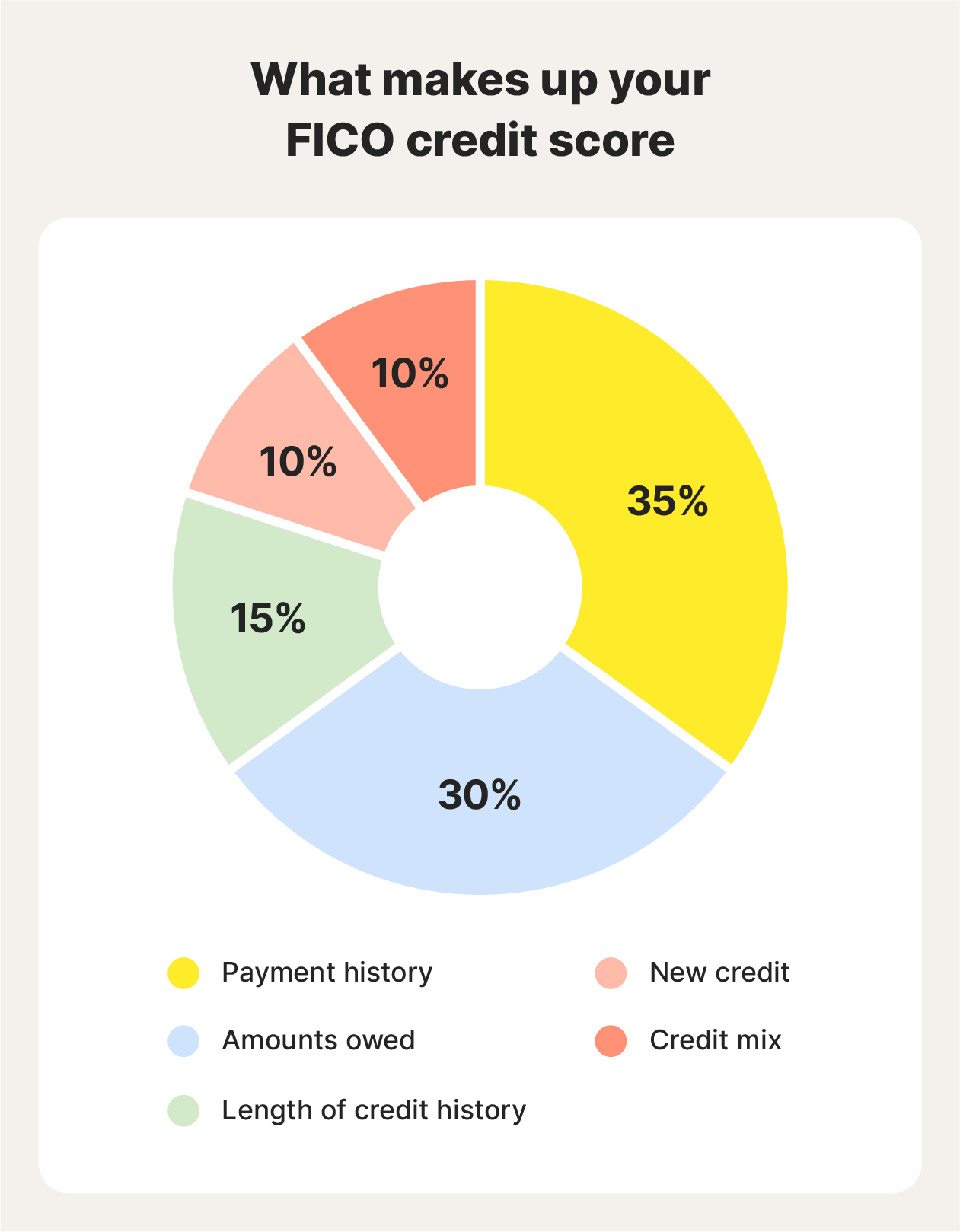
Pie chart showing what factors make up your FICO credit score.
Types of credit and credit mix examples
There are two main types of credit: revolving and installment. Let’s explore what each type of credit looks like, and review what does and does not affect your credit mix.
Revolving credit
Revolving credit is an open-ended credit line that lets you borrow as needed and repay over time, commonly in the form of a credit card. Unlike loans with a set end date, revolving accounts stay open as long as you remain in good standing. These accounts come with a preset credit limit; for instance, a limit of $2,000 means you can carry a balance up to that amount at any given time.
Each revolving credit account also comes with an interest rate and a minimum payment amount. Here are some types of revolving credit accounts:
- Credit cards: Both unsecured and secured (which require a deposit) credit cards count as revolving lines of credit. Pre-approved credit cards also count as revolving credit.
- Retail store cards: These cards are often promoted at the register and offer discounts and rewards at the specific store, such as the Target Circle card.
- Home equity line of credit (HELOC): Often used to fund home improvements, a HELOC allows you to borrow against the equity you have in your home.
- Personal line of credit (PLOC): Usually reserved for good-credit borrowers, a personal line of credit lets you borrow or withdraw funds as needed.
- Digital line of credit: These accounts allow you to make online purchases using a personalized credit line, such as PayPal Credit.
- Business line of credit: For business owners, when you have an established relationship with a vendor, they may offer you a line of credit for your business purchases.
Installment credit
Installment credit (also known as an installment loan) is a type of credit account in which you borrow a fixed amount of money and repay it over time, such as a mortgage. Repayment terms range from months to years, and interest rates and payment amounts are fixed. For instance, a $20,000 car loan may have a 5-year term, an 8.5% interest rate, and a monthly payment of $410.
By diversifying the types of loans you have appearing on your credit reports, you can strengthen your credit mix and show lenders that you can handle long-term financial commitments. Here are some of the most common types of installment loans:
- Mortgage.
- Auto loan.
- Student loan.
- Personal loan.
- Home equity loan.
- Refinance loan.
There are also loans specifically designed to help you build credit and improve your credit mix, such as credit builder loans (where you don’t actually receive funds until the loan is paid off). Certain buy now, pay later programs may also affect your credit score if the provider reports payments to credit bureaus, but many don’t report on-time payments and only report missed ones.
What isn’t part of a credit mix
Whether a loan or line of credit affects your credit mix depends on the information reported to the credit bureaus. Not all lenders or creditors report accounts to the three major bureaus, especially if the account is temporary. Others report only negative information, such as late or missed payments.
Here are some common types of credit products you may not see appear on your credit reports:
- Payday loans: These high-fee, short-term loans only appear on your credit report if you default. They don’t affect your credit mix.
- Title loans: Secured with your vehicle as collateral, these high-APR (Annual Percentage Rate), short-term loans usually don’t appear on your credit reports unless your account gets sold to collections or your car is repossessed.
- Buy now, pay later loans (BNPL): Many BNPL programs are designed to be short-term and rarely appear on your credit reports. However, certain BNPL accounts may be reported as installment loans (such as Klarna, Affirm, Afterpay) or as revolving accounts (like PayPal credit).
- Rent and utility reporting: In newer scoring models, like FICO Score 9 and 10, reporting rent and utility payments can help you build your credit score. However, these payments are typically treated as payment history rather than a new category of credit.
How to improve your credit mix
To improve your credit mix, you should first assess your financial goals and budget to determine if taking on new debt is worthwhile. If it is, here are some strategies you can use to improve the credit mix portion of your score:
- Add a new type of account: If you only have installment loans reporting, consider opening a revolving credit line. Alternatively, if you only have revolving credit, consider obtaining an installment loan.
- Use a credit builder loan: When you’re starting with very little credit, no credit, or trying to rebuild your credit, a credit builder loan can help you improve aspects of your score, including payment history and credit mix.
- Keep existing accounts open: If you have only one installment loan or revolving credit card, closing it will remove that account type from your credit mix. Keep at least one of each type active to maintain a diverse credit mix — unless they’re costing you financially, for example, with high annual fees.
- Avoid applying for multiple accounts at once: Instead, focus on opening one account at a time and using it to build and improve your credit slowly, but steadily.
Focus on creating a healthy mix of both revolving and installment credit accounts. While a single account can establish credit, a healthy credit mix typically requires more than one type of account over time. And remember, your payment history is the most impactful part of your credit score, so don’t let improving your credit mix get in the way of making timely payments.
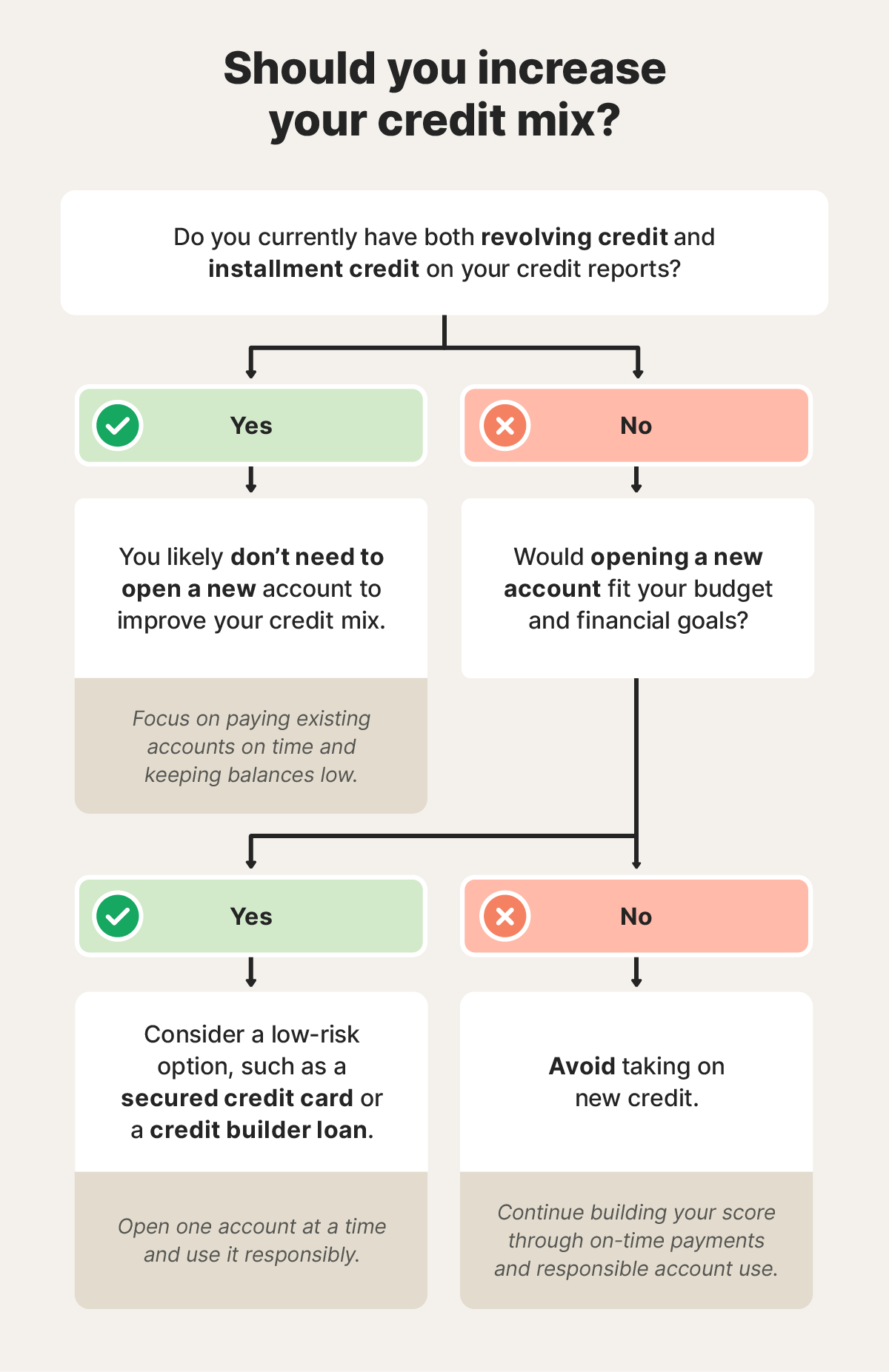
A flowchart to help readers determine whether or not they should increase their credit mix.
Keep tabs on your credit with LifeLock
When trying to improve your credit mix, it's essential to regularly monitor your credit reports and credit score. Not only can this help you gauge your credit progress, but it can also alert you to potential problems. With credit monitoring services through LifeLock, you’ll get notified when there are changes to your credit report, which could alert you to fraud.
LifeLock can also help you protect your credit with dark web monitoring, data breach alerts, and privacy monitoring. And if your information is compromised and fraudsters damage your credit, LifeLock can help you get your identity back.
FAQs
Can adding a new account hurt my credit score?
In the short term, adding too many new credit accounts can temporarily hurt your credit score, because each requires a hard inquiry. However, the impact is usually minimal and relatively short-lived. Additionally, a new account can decrease your average age of accounts. The fewer accounts you have, the bigger the impact. But this negative effect decreases over time.
How can I improve my credit mix without opening accounts?
Becoming an authorized user on someone else’s credit card may help if you lack revolving accounts on your credit report. And getting your rent and utility payments reported for free through tools like Experian Boost may help you improve your credit.
How long before a new account improves my credit mix?
Generally, the impact on your credit mix will be reflected as soon as the new account appears on your credit report. Some new accounts, like credit cards, will typically appear on your report in 30 to 60 days.
Editors’ note: Our articles provide educational information about identity theft, scams, financial fraud, and other topics that can put your identity or personal accounts at risk. LifeLock offerings may not cover or protect against every type of crime, fraud, scam, or threat we write about. For more details about how we write, review, and update our articles, see our Editorial Policy.
Related articles